
Compare MRNC-255 / 255N and MRNC-320 / 320N by installation orientation, combined workpiece and fixture load, mounting space and control requirements. A larger table diameter alone does not establish suitability.
MRNC-255 is a candidate where a 255 mm faceplate and its catalogue load limits suit the application. MRNC-320 provides a 320 mm faceplate and higher listed load limits, but also adds table mass and installation space requirements. Both require application and configuration confirmation before ordering.
Catalogue comparison
| Selection item | MRNC-255 / 255N | MRNC-320 / 320N |
|---|---|---|
| Worktable diameter | 255 mm | 320 mm |
| Through-hole diameter | 33 mm | 40 mm |
| Table height, horizontal installation | 167 mm | 222 mm |
| Center height, vertical installation | 160 mm | 210 mm |
| Allowable load, vertical installation | 100 kg | 150 kg |
| Allowable load, horizontal installation | 250 kg | 350 kg |
| Allowable load, with tailstock | 250 kg | 350 kg |
| Indexing accuracy / repeatability | 15 / 4 arcseconds | 15 / 4 arcseconds |
| Maximum table speed | 16.6 rpm | 16.6 rpm |
| Net weight, motor excluded | 93 kg | 174 kg |
Source: the supplied TANSHING catalogue, printed pages 13–14 (PDF page 8 in the supplied scan). These are catalogue reference values, subject to the accepted order configuration and drawing. Maximum speed is not a guaranteed loaded machining speed. Positioning figures are not finished-part tolerances.
Start with the combined load and its orientation
Add the workpiece, chuck, fixture and attached components. Compare that total with the rating for the actual installation orientation. Do not apply the horizontal rating to a vertical setup.
For example, an illustrative 120 kg combined load exceeds the MRNC-255 vertical catalogue limit of 100 kg and is below the MRNC-320 vertical limit of 150 kg. This makes MRNC-320 a candidate for further review; it does not approve the application. Load offset, inertia, allowable moments, cutting forces and clamping still need checking.
A tailstock arrangement also requires alignment, support and mounting confirmation. A listed tailstock load figure does not mean a tailstock is included in the quotation.

Check the machine envelope before choosing the larger model
MRNC-320 adds 81 kg of catalogue net weight before the motor. Check the machine-table payload including the rotary unit, motor, fixtures, workpiece and other installed equipment. Machine payload and rotary-table allowable load are separate checks.
The different table and center heights affect tool access, tailstock matching and travel clearance. Review the exact dimensional drawing, mounting interface, cable and motor clearance, and the swept envelope of the rotating part and fixture.
See the drawings on the MRNC-255 / 255N product page and MRNC-320 / 320N product page.
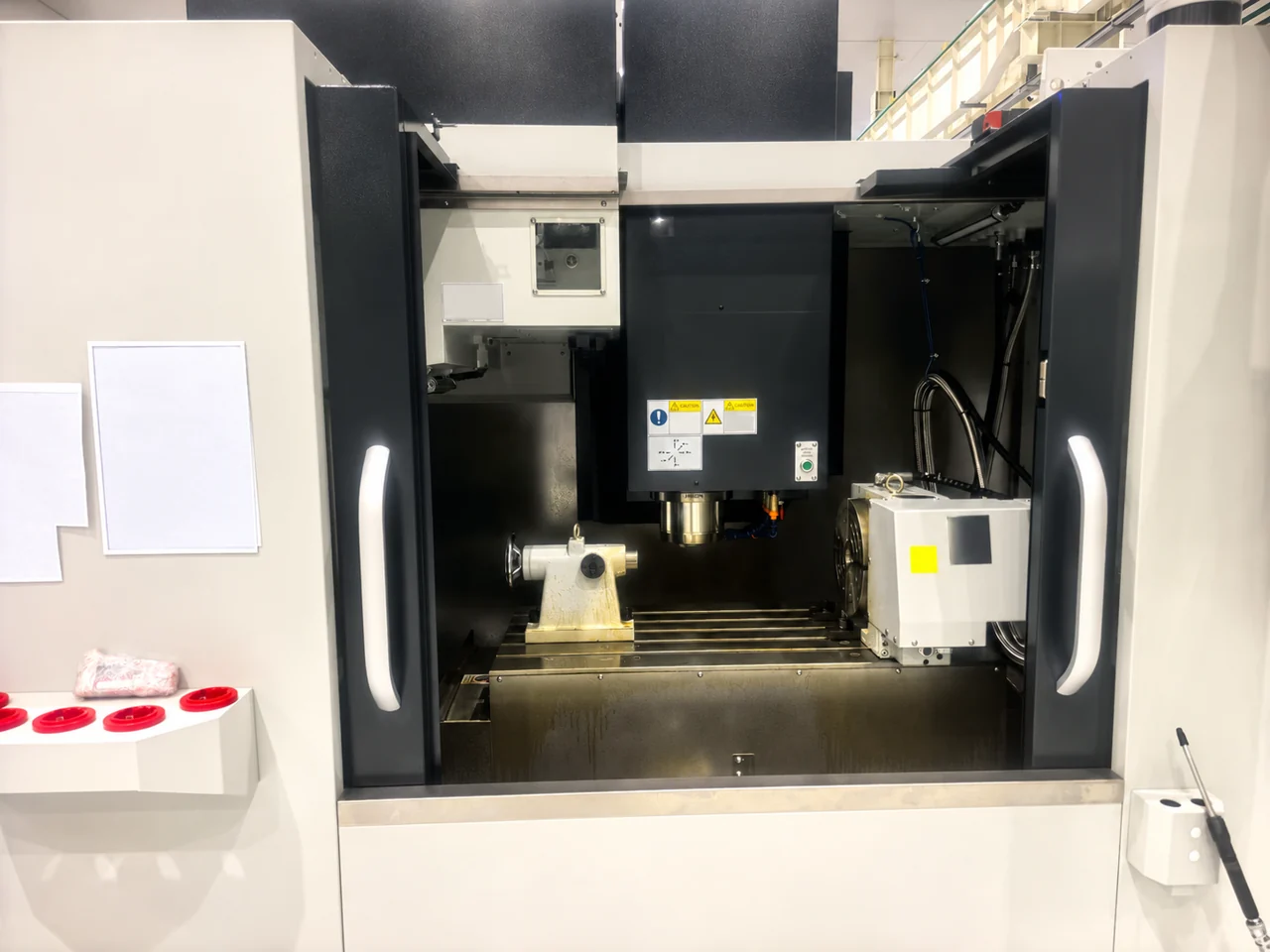
Standard or N: confirm the motor-cover dimensions
The catalogue groups standard and N versions in shared specification columns. N identifies the shortened motor-cover configuration. Select the exact suffix from its drawing and confirmed motor installation; do not treat N as an accuracy or load-capacity upgrade.
Confirm the control and clamping configuration
Specify whether the job needs indexed positioning or simultaneous fourth-axis machining. Controller brand alone does not establish compatibility: confirm the control model, enabled axis functions, drive, motor, encoder, interfaces and installation scope. Check hydraulic clamping requirements and the agreed supply scope as well.
Use the fourth-axis compatibility checklist to collect the machine details. For terminology and parameter interpretation, see the rotary table specifications guide.
Send one set of details for a useful comparison
- Machine brand, model, controller and available axis configuration.
- Installation orientation, mounting drawing and available travel.
- Part and fixture drawings, combined mass and load offset.
- Required movement, machining operations and accuracy requirements.
- Preferred model and suffix, quantity, destination and required timing.
Complete the technical inquiry worksheet with the details available. Mark unknown items for review and email the saved PDF with your drawings to sales@rotivex.com.
ROTIVEX coordinates technical confirmation and sourcing from Shanghai. Vera provides an initial reply within 12 hours; final model, scope, price and timing follow technical review.
Leave a Reply